
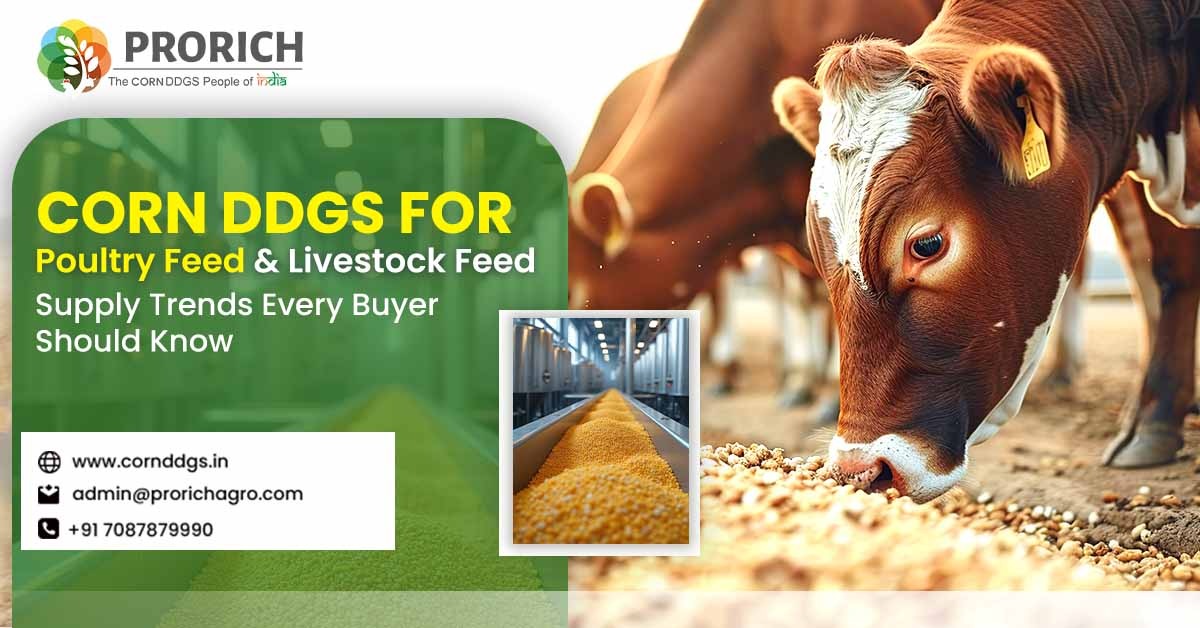
Demand for high-protein, affordable feed drives the global feed ingredient market, which includes corn DDGS. Corn DDGS for livestock food will increase during the 2030s because of worldwide poultry, swine, and animal output. DDGS’s fastest-growing end-use markets include Corn DDGS for poultry feed. Global DDGS use grew in 2023 as poultry farmers sought cheaper protein sources than soybean or fish meals. China, Vietnam, Thailand, Indonesia, Japan, and South Korea import DDGS because of growing poultry production. DDGS imports are rising in the Middle East and Africa to assist poultry and livestock industries despite infrastructure challenges. Despite this, Europe is boosting the inclusion of poultry in diets, while North America produces a lot for internal use and export. Most crucially, protein-rich, cost-competitive DDGS helps feed businesses reduce mix costs. Due to population increase and meat consumption, various international poultry sectors are developing, promoting DDGS adoption as a feed element.
Key production regions drive the supply of corn DDGS for poultry feed
When corn is processed to make ethanol, DDGS is made. Once the starch is turned into alcohol, the protein, fibre, and energy-dense products that are left over are dried and sold as feed for animals like chickens, cows, and pigs. Also, where there is a lot of ethanol production affects the supply a lot, since more ethanol means more DDGS.
Key areas for production:-
1. North America: The Centre of the world’s supply
- The US’s huge corn ethanol business makes it the world’s biggest supplier of DDGS.
- Ethanol plants in the Midwest and other grain-belt states annually produce tens of millions of tonnes of DDGS.
- The U.S. remains the largest exporter, benefiting from well-established logistics and infrastructure. Thus, it helps both domestic feed use and foreign trade.
2. Asia-Pacific: A region of rapid growth
- As livestock industries grow, countries like China and India are depending more and more on their production of DDGS. They also import to meet the growing demand for animal feed.
- China is making more ethanol, which helps the regional supply grow. This is partly due to regulations that promote blending.
- India’s growing ethanol business is making more DDGS available for use as animal feed in India and to sell in nearby markets.
3. Latin America: A New supplier
- Brazil has generally focused on making ethanol from sugarcane. But they are quickly increasing the production of ethanol from corn, especially in states like Mato Grosso. The development is adding a lot of new DDGS.
- Brazilian farmers are looking for new places to sell their goods, like Asia. This is making the world supply network bigger.
4. In Europe, demand is rising while supply is shrinking.
- The production of DDGS in Europe falls short of North America’s output. The market for this product continues to expand because of two factors:
- policies that promote healthy agriculture practices and the rising demand for alternative animal feed options.
- DDGS serves as a feed ingredient which Germany and France use in their livestock and poultry feeding programs.
Buyers should consider some important quality parameters before sourcing corn DDGS
- The most critical nutritional aspect requires different protein, fat, fibre and metabolisable energy components to maintain constant levels through all product batches.
- Buyers need to examine the crude protein content, which typically ranges from 26 to 30 percent while they specifically need to focus on the digestible amino acids that include lysine and methionine, which poultry feed needs.
- The product requires moisture levels to stay under 12 per cent because this threshold prevents mold growth and caking and extends product storage life during both transportation and extended storage periods.
- DDGS has a golden to light brown color and a clean fermented grain smell, which means it has been dried properly. On the other hand, its dark color and burnt smell mean it was damaged by heat and has less nutritional value.
- Fat content and energy value: Cattle get more energy from feed with more oil, but too much change can mess up feed formulations. Buyers should get recent lab tests.
- Control of mycotoxins and other contaminants: trustworthy suppliers give testing results that show levels of aflatoxin, fumonisin, and heavy metals to make sure they follow feed safety rules.
What do all DDGS buyers need to know about the future supply?
This is something that the U.S. and other big exporters should know about. The harvest in South America was very good, which caused the world’s corn ending stocks to drop to their lowest levels in years. This means that there is less corn available, which is what producers use to make DDGS. The amount of corn DDGS that is available depends on how much ethanol is made. When more ethanol is made from corn, there is more DDGS available. On the other hand, when ethanol margins go down and feed usage patterns change, there is less supply. Brazil is using big trade deals to send more corn DDGS from China to Europe to feed poultry. Thus, the change in supply is due to established sources moving to new ones.
The U.S. and India have entered into new trade agreements, which will establish new economic partnerships. The new trade deal between India and the U.S. reduces DDGS import duties, which indicates increasing worldwide DDGS demand and trade activity. Competitive forces create opportunities because they lead to price pressure.
Corn DDGS serves as an excellent option for livestock feed ingredients
You should evaluate three important factors which demonstrate we are the optimal provider of corn DDGS for livestock feed and poultry feed.
- Our company delivers premium corn DDGS products which maintain industry-standard protein, fibre and energy content for all animal and bird feed formulations.
- Our organisation conducts rigorous quality assessment procedures which test every feed batch for moisture, protein, fibre and contamination until our clients can confirm the product suitability, safety and digestibility.
- The supply chain of our organisation operates through dependable delivery mechanisms. The system enables us to deliver products in bulk according to prearranged delivery times which apply to Indian markets and international customers. The process becomes vital during times when global markets experience restricted availability of DDGS products.
Conclusion
Corn DDGS serves as a vital element in poultry meal because it provides poultry with essential protein and energy together with digestible phosphorus. When you get DDGS from trusted suppliers and use it at the right levels, it can lower feed costs without hurting the birds’ performance. The poultry industry needs to maintain consistent product quality and select appropriate feed formulations while conducting frequent nutritional assessments to achieve optimal financial and dietary results. The worldwide market for corn DDGS for poultry feed from India presents substantial business opportunities. Indian poultry feed uses Corn DDGs as the optimal component in its meal formulation.
Frequently asked questions
Q1. What does corn DDGS do for poultry feed?
In broiler and layer diets, corn DDGS is used as a source of protein and energy. It replaces some of the soybean meal and corn.
Q2. What is the best amount of DDGS to put in poultry feed?
Generally, diets for broiler starters should contain 5 to 8% of DDGS, while diets for growers and finishers should contain up to 10 to 12%. All of this depends on the formulation’s quality.
Q3. Is it safe for birds to eat corn DDGS?
Yes, DDGS is safe and effective for poultry feed when it comes from suppliers who check for quality and test for moisture and mycotoxins.
Q4. Does DDGS have an effect on the growth of poultry or the number of eggs they lay?
No, when the amino acids and energy levels are right, DDGS helps with normal growth, feed conversion, and egg production.