
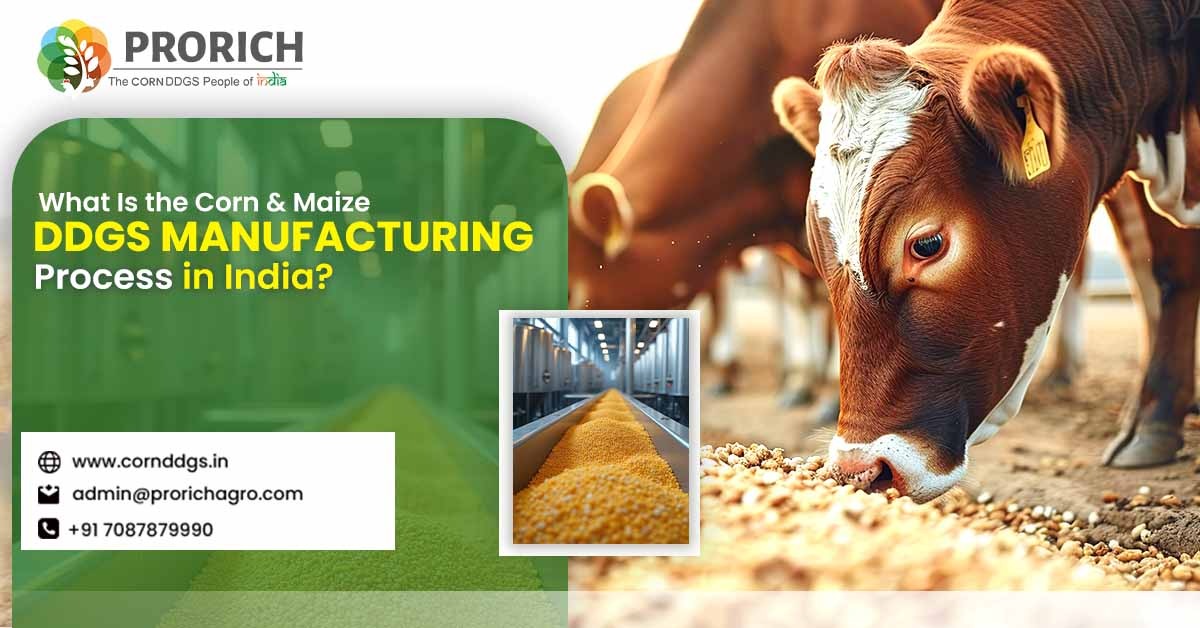
Corn (maize) serves as a vital component within India’s agricultural processing operations and biofuel production facilities. The volume of DDGS (Distillers Dried Grains with Solubles) production has grown substantially since the government implemented ethanol blending programs. The fermentation process of maize used for ethanol production generates DDGS as a co-product. The Corn DDGS manufacturing process in India has seen a steady rise in the establishment of maize-based distilleries. Ethanol production plants in Maharashtra, Karnataka, Uttar Pradesh, and Bihar produce DDGS as their operational waste. The protein-rich feed ingredient finds usage in poultry, dairy, cattle, and aquaculture industries. Egg production increases when ethanol production rises because it helps feed livestock, which creates a major market for animal feed in India.
What is DDGS (Distiller’s Dried Grains with Solubles)?
DDGS (Distillers Dried Grains with Solubles) serves as a nutritious byproduct which ethanol producers obtain by extracting starch from corn. The production of DDGS starts with the drying of leftover grains, which distillation and fermentation processes leave behind.
The Key Features of DDGS.
- DDGS has a high protein content which ranges between 25 percent and 30 percent.
- The product provides energy together with fiber which animals can digest.
- The product contains all essential amino acids.
- The product serves as a common feed ingredient for multiple livestock species including poultry and cattle.
- The product functions as a cost-effective replacement for conventional feed components like soybean meal.
- DDGS has become a sustainable feed option which Indian livestock and poultry farmers use because it provides both nutritious value and low-cost production.
The Corn DDGS manufacturing process in India requires essential steps for its Production
India produces Corn and Maize DDGS through its primary manufacturing method which uses ethanol production as the base process. Maize ethanol production leads to the creation of DDGS which serves as an essential byproduct. India has increased its DDGS production through the establishment of ethanol facilities which the country developed as part of its biofuel program.
The manufacturing process follows these sequential steps
1. Cleaning & Grinding
The first stage requires cleaning high-quality maize (corn) to remove dust and other impurities. The material undergoes grinding until it reaches a fine meal state, which creates optimal conditions for starch extraction.
2. Slurry Preparation
The ground maize needs water to form a slurry. Enzymes serve the process by converting complex starch into fermentable sugars.
3. Liquefaction & Saccharification
The heated slurry receives enzymes which convert starch into simple sugars. This process prepares the mix for fermentation.
4. Fermentation
The sugar-rich mix receives yeast as an addition. Yeast converts sugars into ethanol and carbon dioxide during the process of fermentation. The complete process requires a duration of 48 to 72 hours for its execution.
5. Distillation
The distillation process separates ethanol from all other liquids and solids that exist in the fermented mixture. The process collects ethanol for use as either fuel or industrial products.
6. Separation of Wet Grains
The whole stillage from distillation process undergoes centrifugation to split its contents into solid wet distillers grains and liquid thin stillage.
7. Drying Process
The process begins with wet distillers grains which combine with condensed solubles. After the operators determine their optimal moisture content, the material enters the rotary dryer for drying. Hence, the final product reaches its DDGS state after the drying process concludes.
8. Packaging & Distribution
The process starts with chilling DDGS which undergoes testing to measure its protein content and moisture level and fiber content. This product proves to be extremely beneficial for poultry farms and cattle feed manufacturers and businesses that raise livestock.
What is included in the Raw Material Selection of the Maize DDGS manufacturing process in india?
The Maize DDGS manufacturing process in India begins with the careful selection of high-quality raw materials, especially premium-grade maize. The nutritional value, consistency, and overall quality of the final DDGS product depend largely on the quality of corn used in the process. In the ethanol production system, maize is processed to extract starch for ethanol manufacturing, and DDGS is generated as a valuable by-product of this ethanol production process. The selection of premium-grade maize produces better starch conversion efficiency together with higher protein content and improved feed quality results.
Key Factors in Quality Corn Procurement:
- Fermentation processes achieve effective results because high starch content enables fermentation which produces higher ethanol yields.
- The storage conditions of low moisture content between 12 and 14 percent help to stop fungi from growing and products from becoming spoiled during the storage period.
- Free from Aflatoxins & Contaminants—Essential for safe animal feed production.
- Uniform Grain Size & Bright color—indicates that the maize has reached a state of proper drying after the drying process.
- Reliable Supplier Network—Ensures consistent availability and stable pricing.
- Thus, the correct Maize and Corn DDGS manufacturing process in India maintains DDGS quality, improves nutritional content, and supports efficient production.
Factors Increasing the Market Demand for Corn DDGS in India
The animal feed market in India shows increasing demand for corn DDGS because of its high nutritional value and economical pricing. The poultry and dairy and aquaculture industries have experienced strong growth which has increased their demand for DDGS as a protein-rich feed ingredient. The construction of new ethanol plants in India has created additional sources of corn DDGS which helps to reinforce the existing supply system. The increasing expenses of feed materials have led farmers and feed producers to adopt DDGS as a cost-effective solution which maintains high nutritional value.
Government Ethanol Blending PoliciesImproves animal growth and feed efficiencyGrowth in AquacultureIncreased use in fish and shrimp feedExport OpportunitiesExpanding international demand for Indian DDGS
| Factors | Impact on Market Demand |
|---|---|
| Growth of Poultry Industry | Higher requirement for protein-rich feed ingredients |
| Expansion of Dairy Sector | Increased use of DDGS for improving milk yield |
| Rising Ethanol Production | More DDGS availability as a by-product |
| Cost-Effective Feed Option | Affordable alternative to soybean meal |
| High Protein & Energy Content | Higher requirement for protein-rich feed ingredients |
Hence, the demand for India’s maize DDGS market originates from increasing livestock populations and the laws supporting ethanol production and the requirement to provide inexpensive high-protein feed materials. The poultry and dairy and aquaculture industries will drive an incremental increase in corn DDGS demand.
The aquaculture and dairy and poultry industries use corn DDGS for their operational needs
Corn DDGS (Distillers Dried Grains with Solubles) is a common animal feed ingredient because it provides both protein and caloric energy. The feed ingredient serves as a substitute for both soybean meal and maize because of its complete nutritional composition.
1. Chicken Food
The product enhances feed efficiency and boosts broiler growth while it also improves layer egg production and yolk quality. The product reduces costs for feed formulation while it provides essential amino acids and energy to users.
2. Dairy Cow Food
This is useful to promote milk production, and fat and even Digestible fiber help the rumen. Furthermore, this is a cheap protein supplement and improves animal performance.
3: Aquaculture feed.
The fish and shrimp feed ingredients contain ingredients which promote weight gain and better feed efficiency. The ingredients provide energy together with digestible protein which reduces the need for costly fish meal products.
Conclusion
The nutritional composition and moisture content of Corn DDGS must remain stable while its products maintain their value throughout extended storage periods. The combination of advanced processing methods together with proper drying techniques and thorough product evaluation procedures leads to maintaining protein levels while stopping any potential contamination. India requires high-quality DDGS production because it supports sustainable growth in poultry and dairy and aquaculture sectors. The business segment offers affordable feeding solutions to its customers. The Corn DDGS manufacturing process in India serves to increase product value while enhancing supply chain dependability and market position. The services you require can be obtained from Corn DDGS in India.
Common Questions People Ask
Q1: What is Corn DDGS?
Corn DDGS (Distillers Dried Grains with Solubles) functions as an animal feed ingredient which contains high protein value and results from the ethanol production process that uses corn as its primary input.
Q2: Is corn DDGS suitable for poultry feed?
The feed ingredient promotes growth in poultry which improves their feed efficiency and reduces their total feed costs.
Q3: Can DDGS be used on dairy cattle?
The substance enables dairy cows to produce more milk while increasing their milk fat content and providing them with digestible protein and energy.
Q4: Is corn DDGS acceptable for aquaculture?
The product serves as a low-cost protein source which is used in the production of fish and shrimp feed.
Q5: Why is efficient production important?
The processing method ensures that nutritional quality remains constant while maintaining safe moisture levels and providing extended product shelf life.